Watch & Talk On Demand was a pilot project exploring how interactive video, learner choice, and human facilitation could be combined into a flexible, on-demand learning experience for professionals.
While developed in a language-learning context, the project was intentionally designed around transferable learning principles such as autonomy, reflection, discussion, and optional reinforcement rather than linear content completion.
Non-linear learning journey (no mandatory completion path)
Optional interaction layers to avoid unnecessary interruption
Low-friction production using existing tools and media
Designed to work both independently and alongside live sessions
This pilot explored how interactive video and optional activities could be used to support focus, reflection, and discussion, while allowing learners to control pace, depth, and level of support.
The experience was intentionally designed as a guided but non-linear journey.
Rather than forcing learners through a fixed sequence, the design prioritised:
learner choice and autonomy,
optional interaction instead of interruption,
human presence to frame and motivate learning,
reinforcement through multiple, lightweight activity types.
The goal was not to “test” learners, but to help them notice, think, and talk.
1. Topic selection
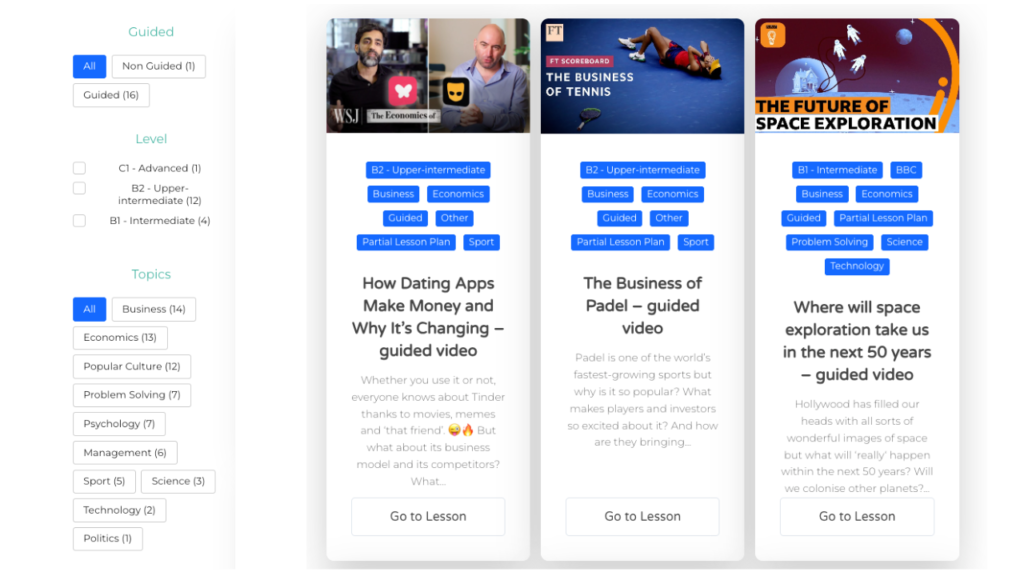
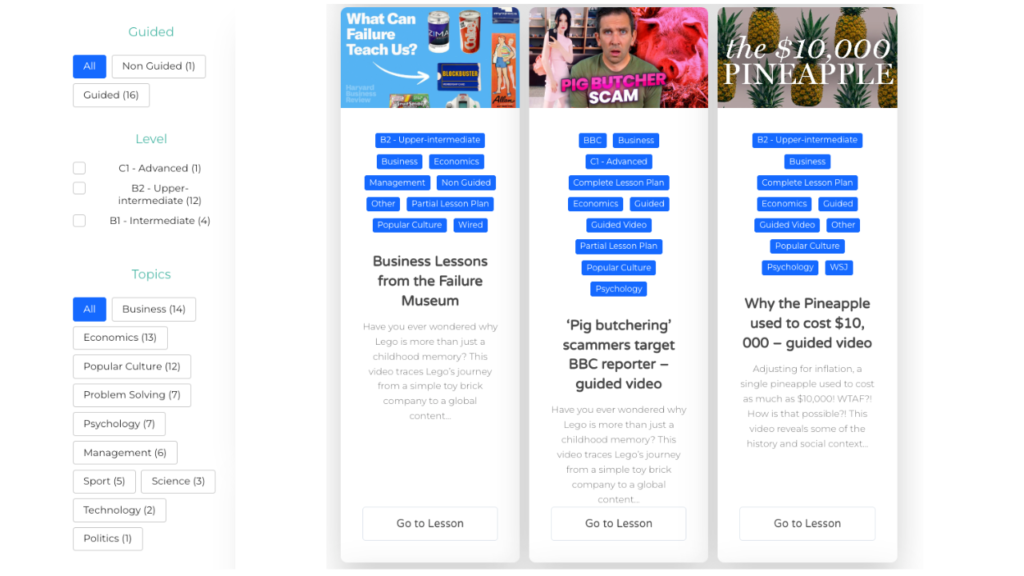
Learners chose a video from a curated database, using interest and relevance as the entry point.
2. Human framing
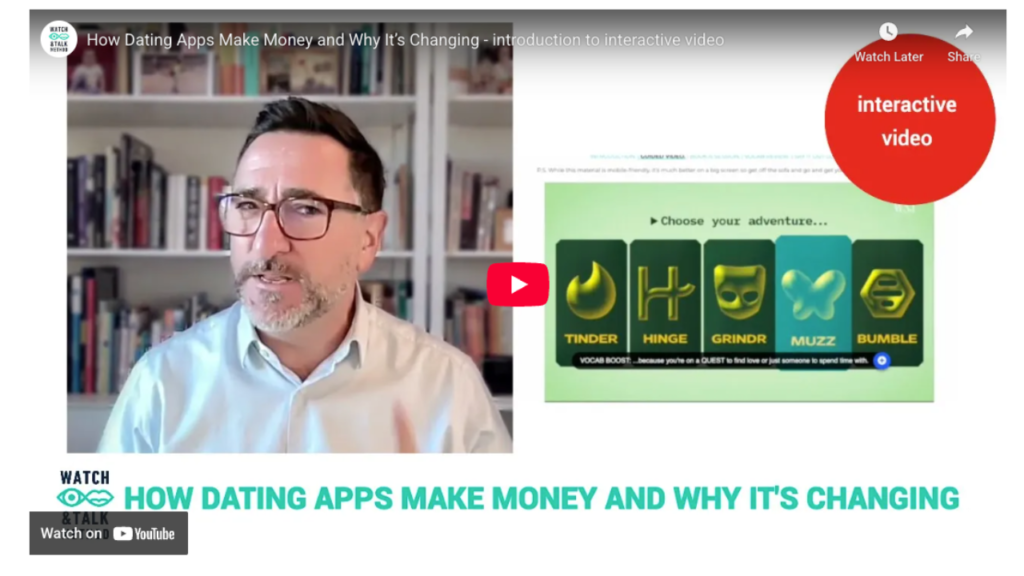
A short trainer video introduced the topic, activated prior knowledge, and set listening priorities.
3. Interactive video
The core video included:
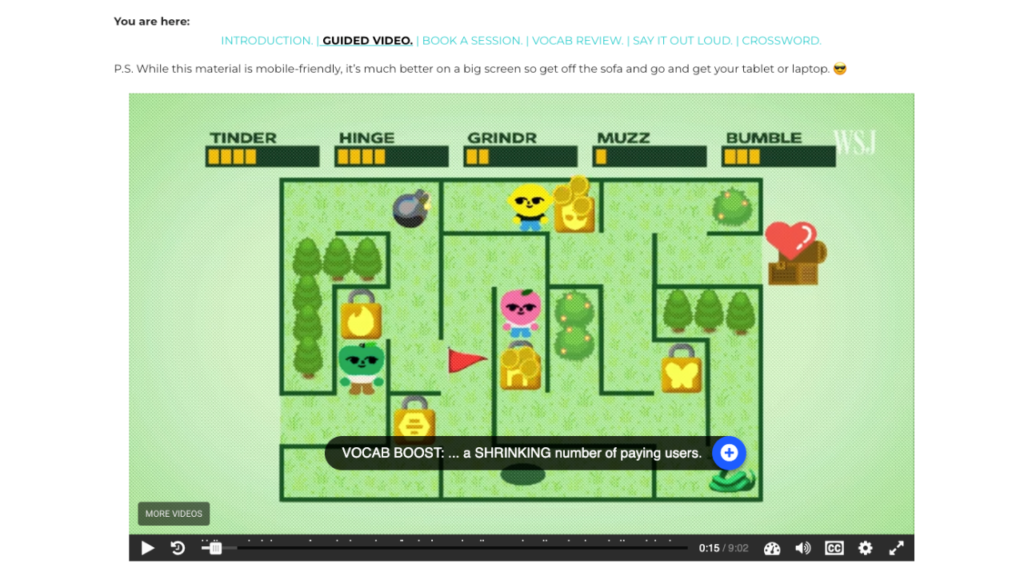
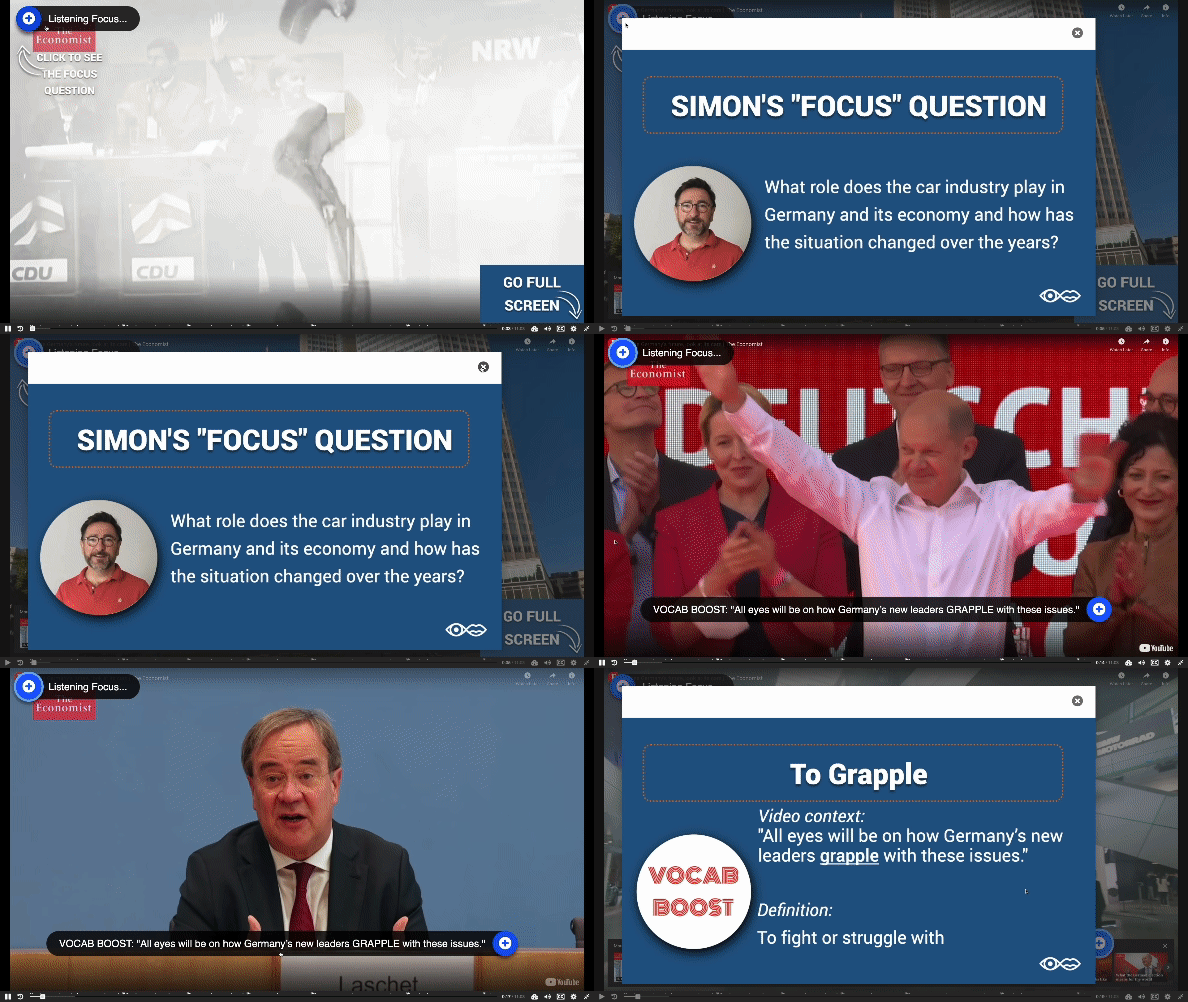
focus questions to guide attention, without providing answers
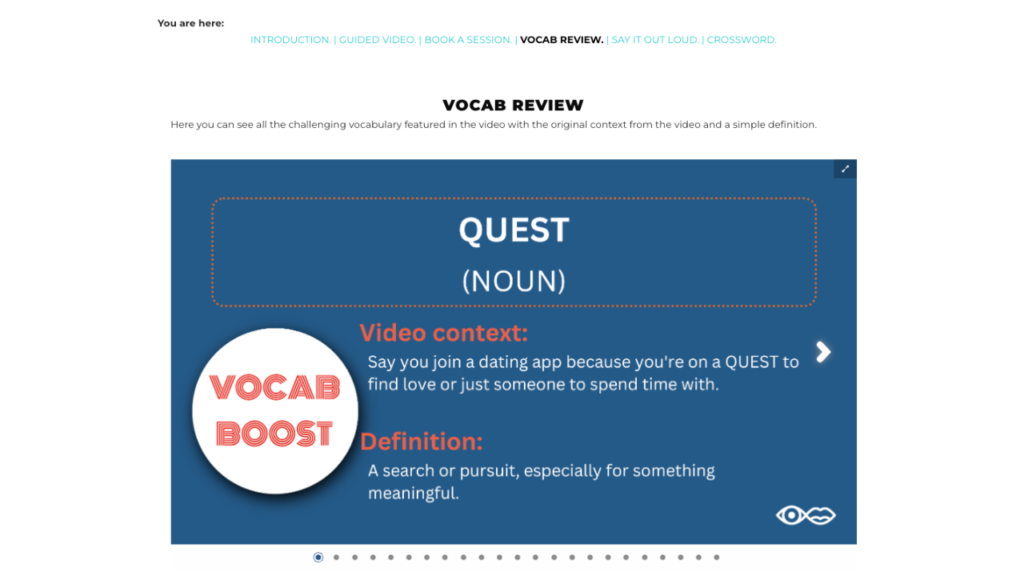
optional vocabulary support appearing in context, allowing learners to self-regulate help
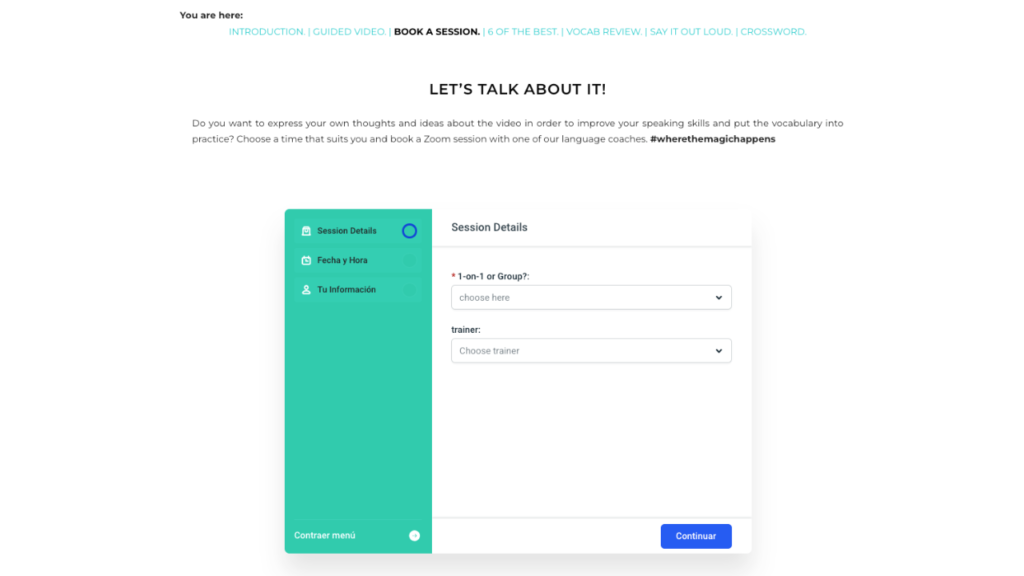
4. Live discussion (optional)
Learners could book a session with a trainer to explore ideas and apply concepts through conversation.
5. Reinforcement activities (optional)
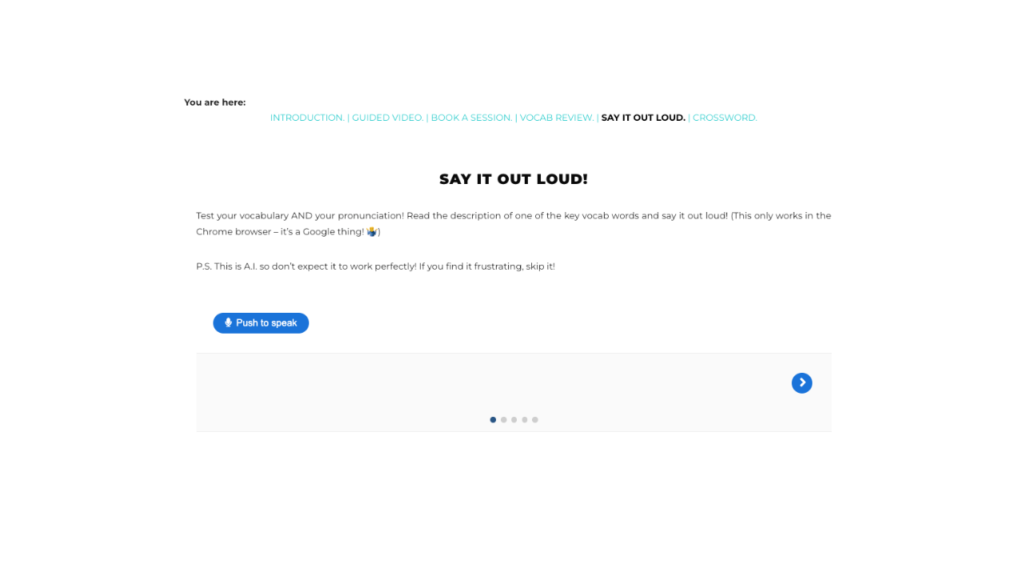
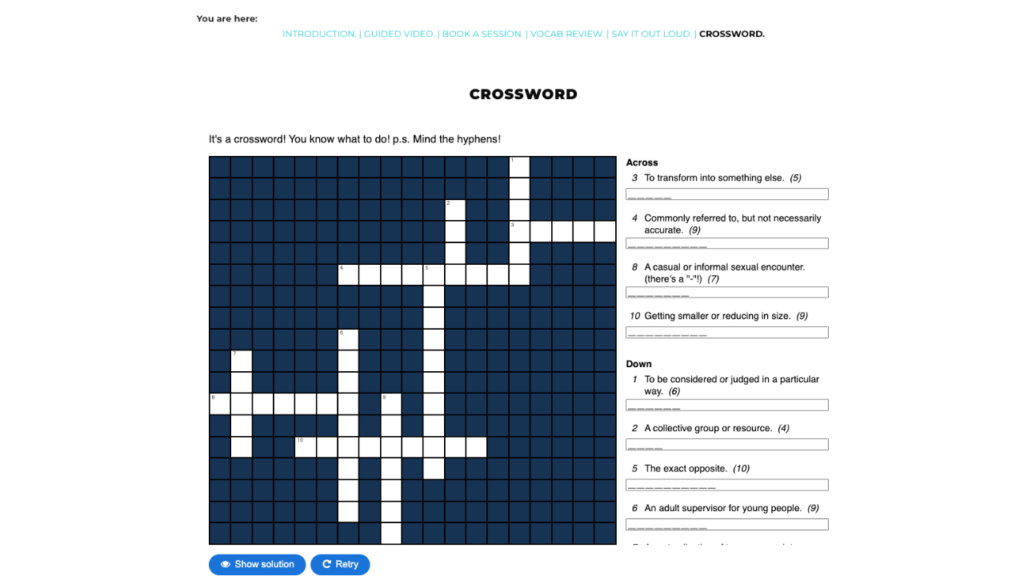
Vocabulary review, voice-based recall, and problem-solving activities provided multiple ways to revisit the same content without enforcing completion.