
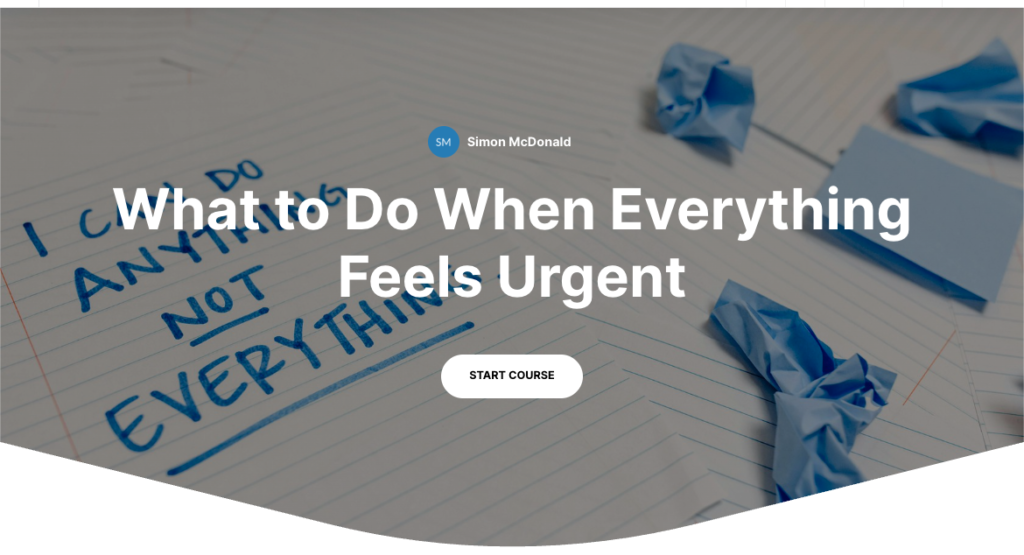
This project is a micro Articulate Rise module demonstrating how I design soft-skills training (time management and decision-making) for clarity when production speed, simplicity, and consistency are the primary constraints.
Structure and pacing informed by core learning science principles, particularly cognitive load, worked examples, and transfer to real-world decision-making
When early-career professionals enter fast-moving work environments, everything can start to feel urgent all at once. Messages arrive from multiple channels, deadlines are rarely explicit, and emotional pressure often substitutes for clear prioritisation. Without much experience to draw on, urgency can become the default signal for what matters most.
This module helps learners pause, separate urgency from importance, and make more deliberate prioritisation decisions in the moment and manage the overwhelm.
I designed this module around a practical question:
what is one useful decision lens for early-career professionals
when urgency begins to dominate their working day?
Time management offers no shortage of frameworks, but introducing too many options too early often creates friction rather than clarity. This project therefore focuses on one clear, widely recognised tool as a starting point, giving learners a simple decision lens they can apply immediately while signalling that other tools exist.
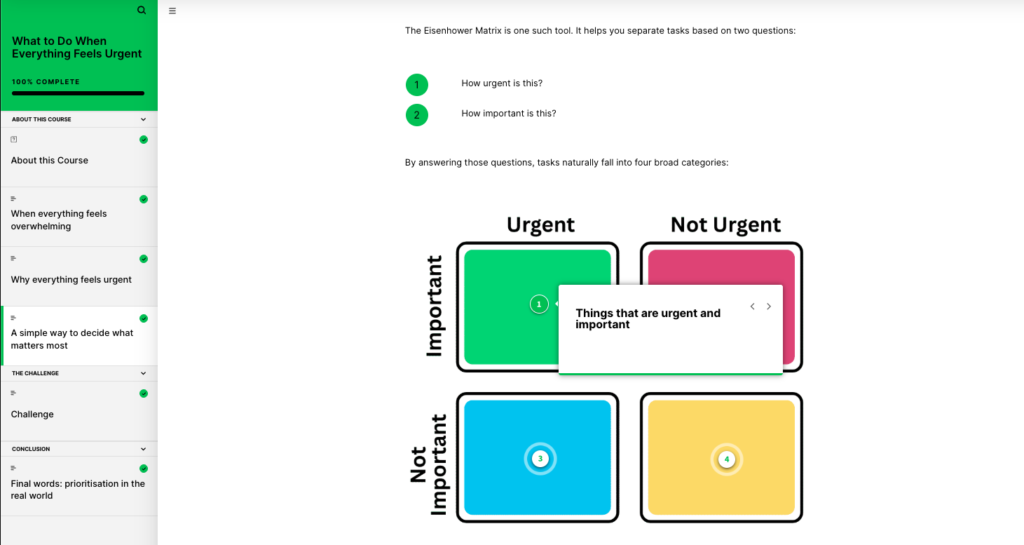
The Eisenhower Matrix introduced as a decision lens, not a framework to memorise.
The module moves quickly from recognition to application, keeping cognitive load low while encouraging deliberate judgement.
Acknowledging overload and urgency without assigning blame
Exploring how context and emotion create false signals
Introducing the Eisenhower Matrix as a thinking aid
Prioritising realistic tasks using the matrix
Reinforcing judgement in imperfect, real-world conditions
Interaction was used selectively and with intent. Rather than simulating complex decision trees or behaviour change more typical of Storyline-based projects, I focused on interactions that support thinking and judgement within the natural constraints of Articulate Rise.
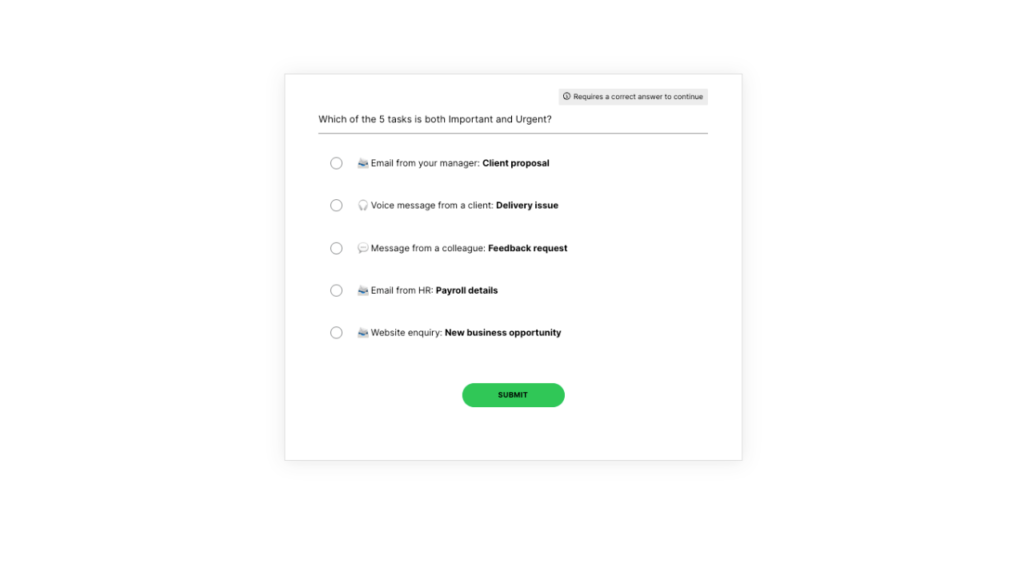
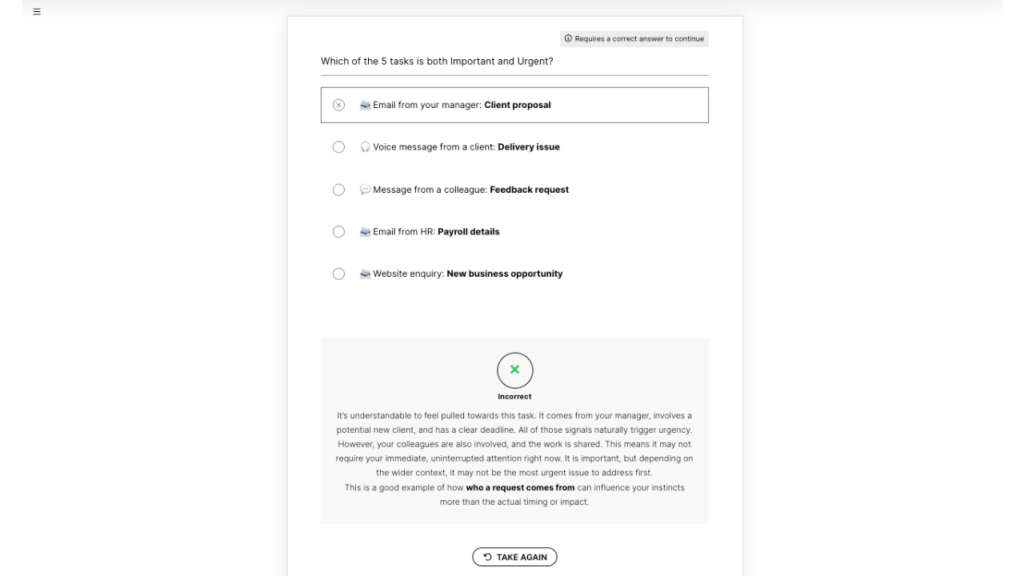
A card-based reveal introduces all of the tasks to reflect overload, followed by a single prioritisation decision. Feedback is concise and explanatory, designed to surface reasoning rather than reward correct answers.
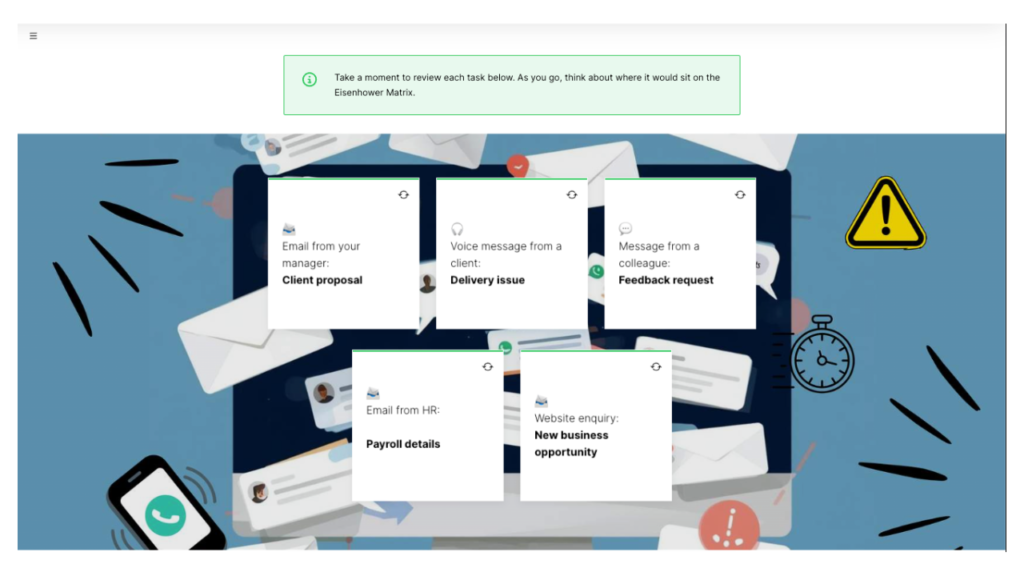
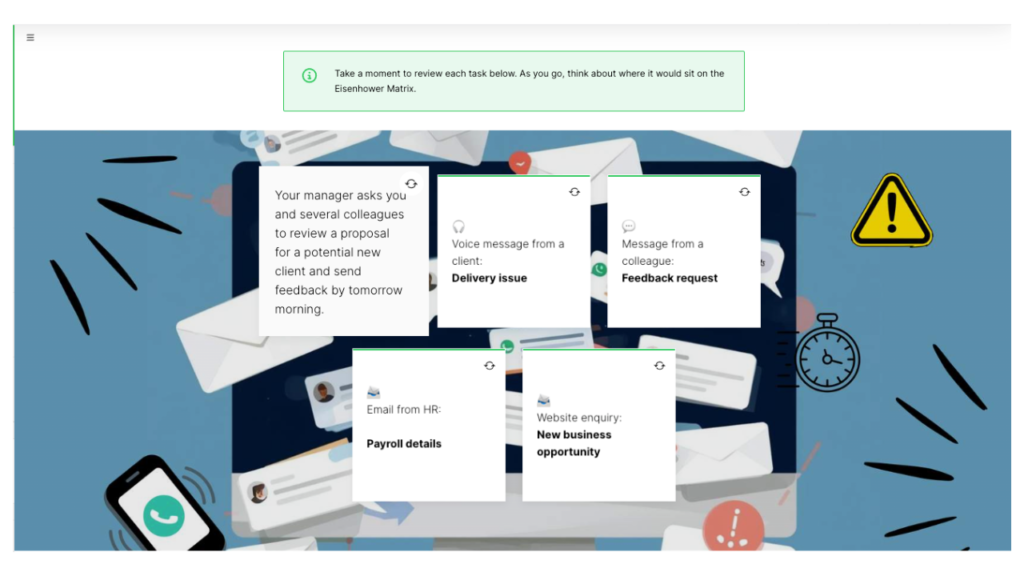
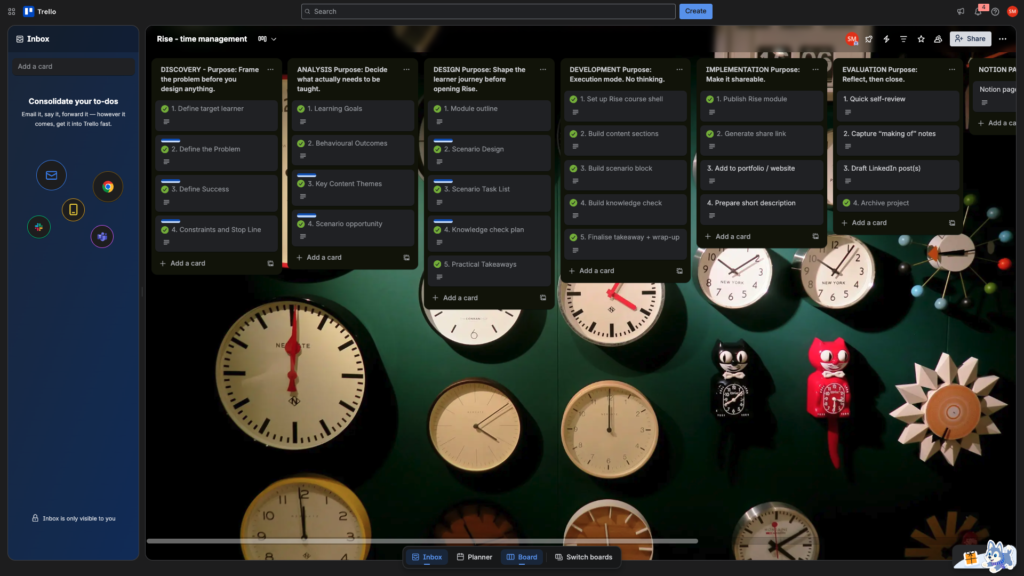
I used a lightweight workflow to maintain momentum and avoid scope creep. Planning and sequencing were mapped in Trello using a simplified ADDIE structure, separating design decisions from production tasks.
Content was drafted outside Rise (using Google Docs) before building in the tool, allowing the build phase to focus on pacing, readability, and consistency.
ChatGPT was used as a “thinking partner” and “second pair of eyes” during drafting and refinement, while all instructional decisions and final content choices remained my own.
This project reflects my approach to learning design when constraints are real and trade-offs matter. Rather than trying to do everything, I focused on doing a few things well, keeping the experience clear, usable, and grounded in how people actually make decisions under pressure.
Articulate Rise proved well suited to this kind of work when used with restraint. The result is a small, focused module designed to be built efficiently, understood quickly, and applied immediately.
You can find the Rise project embedded below (with Netlify).
Alternatively, click to go full-screen.